Semgrep vs Github Advanced Security

Switch from Github to Semgrep and give developers 20+ hours back per review cycle.

Developers:
20+ Hours
reclaimed per review cycle
Security Engineers:
70
false positives avoided per 100 findings

Precise AppSec that speaks your language, not the other way around

svs accuracy icon
Automations that developers love

CodeQL and Dependabot generate too many false positives, making automation impossible without negatively impacting developers.

Semgrep's accuracy, simple policies, and PR experience make automations something that developers love, not hate.

svs prioritize icon
Secure on day one, not day 365

CodeQL's query complexity and long scan times make it hard to scale across an organization.

Semgrep just works - quickly, across 40+ languages, and any number of repos. Turn it on and it starts reducing noise on day one, then learns from your triage decisions over time.

svs developer icon
AI-powered analysis, not just autofix

An autofix for a false positive is just noise at scale.

Semgrep combines static analysis with AI reasoning to detect business logic flaws like IDORs and broken authorization that CodeQL structurally cannot find. Semgrep then enables autofix functionality once the findings have been autotriaged.

Smarter, not noisier

Teams using Semgrep see a 20% reduction in triage workload compared to pure static analyzers like CodeQL.

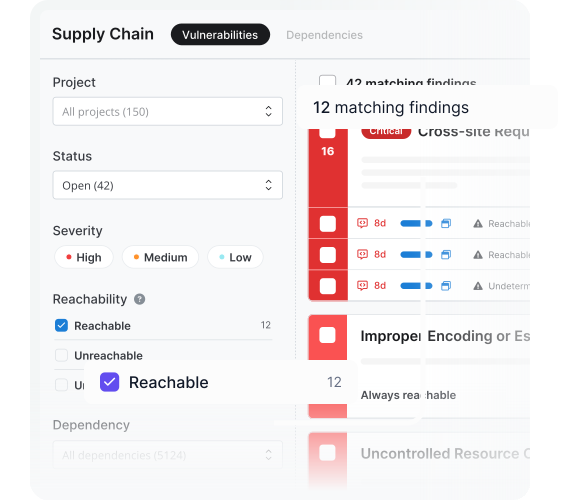
Semgrep Supply Chain's dataflow reachability analysis reduces false positives by 98% compared to Dependabot.

Semgrep
Github Advanced Security

Coverage, scale, and operations

  • Semgrep supports 40+ languages. With Semgrep Managed Scanning, teams can scan 100,000+ repos on day one.
  • Semgrep scans are on average 3x faster than CodeQL. Managed scanning circumvents all of the technical and organizational challenges that come with scaling, and saves thousands in CI costs.
  • With Semgrep Workflows, security teams can encode their processes into automated pipelines written in plain Python and deploy them at scale without maintaining infrastructure.
  • CodeQL supports 12 languages and requires significant per-language tuning to achieve acceptable accuracy.
  • CodeQL runs as a GitHub Actions workflow, consuming Actions minutes that count toward billing. Scan times of 5-20+ minutes per run block PRs and add up across hundreds of repos.
  • Custom security logic must be written in QL, a proprietary query language with limited transferability.

Accuracy (SCA)

  • Reduce false positives by up to 98% with dataflow reachability analysis, available for 10+ languages.
  • Github's partner SCA vendors are an additional cost, and only perform function-level reachability analysis.
  • Dependabot lacks any form of reachability analysis.
  • Other Supply Chain solutions are an additional cost, and don't offer dataflow reachability analysis.

Accuracy (SAST)

  • Semgrep combines deterministic static analysis with AI reasoning to catch both known vulnerability patterns and business logic flaws like IDORs and broken authorization that rule-based tools miss entirely.
  • As teams triage findings, Semgrep learns and codifies security-relevant context to prevent the same issue from occurring again (internal services that are safe to ignore, mitigating functions, etc).
  • CodeQL is purely rule-based and cannot detect business logic vulnerabilities that require understanding context and developer intent.
  • CodeQL's customization requires users to understand and write complex queries in a domain-specific language, with idiosyncrasies across different programming languages.

Secrets scanning

  • Semgrep uses semantic analysis, entropy analysis, and validation to flag hardcoded secrets while minimizing noise.
  • Semgrep uses static analysis and AI to surface generic secrets like passwords without flagging every randomized string in your codebase.
  • SAST, SCA, and secrets all live in one platform with unified policies, triage, and reporting.
  • GitHub now supports secrets scanning with validation and AI-powered generic password detection, but these require a separate Secret Protection license ($19/active committer/month) on top of GHAS.
  • SAST (CodeQL), SCA (Dependabot), and secrets (Secret Protection) are three separate products with separate pricing, configuration, and reporting surfaces.

Prioritization and remediation (SCA)

  • Dataflow reachability analysis and EPSS filtering make it easy to prioritize supply chain findings.
  • Automatically create PRs for upgrades and patches. Breaking change analysis tells developers if an upgrade is safe to merge immediately, or helps them understand what needs to be changed.
  • Inundation from false positives wastes time and erodes developer confidence.
  • AppSec teams must manually filter and prioritize findings.

Prioritization and remediation (SAST)

  • Semgrep makes it possible to only show developers issues that are true positives, with an included fix tailored to their environment.
  • Semgrep Multimodal's remediation experience gives developers a one-click fix in their PRs, with tailored explanations that help them validate and feel confident committing the change.
  • Semgrep's automations and policies make it easy for security teams to get granular control over what issues developers see and where they see them (Jira ticket or PR comment).
  • Inundation from false positives wastes time and erodes developer confidence.
  • AppSec teams must triage, validate, and assign issues to developers, or automate and risk flooding them with false positives.

Business logic and zero-day detection

  • Semgrep detects complex vulnerabilities that rule-based scanners miss: IDORs, broken authorization, and authentication bypasses. These are the vulnerability classes behind many of the largest and most costly breaches.
  • Semgrep's detection capabilities have already found dozens of zero-days at customer organizations, saving tens of thousands of dollars on what would otherwise have been bug bounty reports.
  • CodeQL cannot reason about business logic, authorization flows, or developer intent. These vulnerability classes require manual code review or separate tooling.
  • GitHub uses AI for remediation suggestions (Copilot Autofix), but does not apply AI at the detection layer to find new vulnerability classes.
Coverage, scale, and operations
  • Semgrep supports 40+ languages. With Semgrep Managed Scanning, teams can scan 100,000+ repos on day one.
  • Semgrep scans are on average 3x faster than CodeQL. Managed scanning circumvents all of the technical and organizational challenges that come with scaling, and saves thousands in CI costs.
  • With Semgrep Workflows, security teams can encode their processes into automated pipelines written in plain Python and deploy them at scale without maintaining infrastructure.
  • CodeQL supports 12 languages and requires significant per-language tuning to achieve acceptable accuracy.
  • CodeQL runs as a GitHub Actions workflow, consuming Actions minutes that count toward billing. Scan times of 5-20+ minutes per run block PRs and add up across hundreds of repos.
  • Custom security logic must be written in QL, a proprietary query language with limited transferability.
Accuracy (SCA)
  • Reduce false positives by up to 98% with dataflow reachability analysis, available for 10+ languages.
  • Github's partner SCA vendors are an additional cost, and only perform function-level reachability analysis.
  • Dependabot lacks any form of reachability analysis.
  • Other Supply Chain solutions are an additional cost, and don't offer dataflow reachability analysis.
Accuracy (SAST)
  • Semgrep combines deterministic static analysis with AI reasoning to catch both known vulnerability patterns and business logic flaws like IDORs and broken authorization that rule-based tools miss entirely.
  • As teams triage findings, Semgrep learns and codifies security-relevant context to prevent the same issue from occurring again (internal services that are safe to ignore, mitigating functions, etc).
  • CodeQL is purely rule-based and cannot detect business logic vulnerabilities that require understanding context and developer intent.
  • CodeQL's customization requires users to understand and write complex queries in a domain-specific language, with idiosyncrasies across different programming languages.
Secrets scanning
  • Semgrep uses semantic analysis, entropy analysis, and validation to flag hardcoded secrets while minimizing noise.
  • Semgrep uses static analysis and AI to surface generic secrets like passwords without flagging every randomized string in your codebase.
  • SAST, SCA, and secrets all live in one platform with unified policies, triage, and reporting.
  • GitHub now supports secrets scanning with validation and AI-powered generic password detection, but these require a separate Secret Protection license ($19/active committer/month) on top of GHAS.
  • SAST (CodeQL), SCA (Dependabot), and secrets (Secret Protection) are three separate products with separate pricing, configuration, and reporting surfaces.
Prioritization and remediation (SCA)
  • Dataflow reachability analysis and EPSS filtering make it easy to prioritize supply chain findings.
  • Automatically create PRs for upgrades and patches. Breaking change analysis tells developers if an upgrade is safe to merge immediately, or helps them understand what needs to be changed.
  • Inundation from false positives wastes time and erodes developer confidence.
  • AppSec teams must manually filter and prioritize findings.
Prioritization and remediation (SAST)
  • Semgrep makes it possible to only show developers issues that are true positives, with an included fix tailored to their environment.
  • Semgrep Multimodal's remediation experience gives developers a one-click fix in their PRs, with tailored explanations that help them validate and feel confident committing the change.
  • Semgrep's automations and policies make it easy for security teams to get granular control over what issues developers see and where they see them (Jira ticket or PR comment).
  • Inundation from false positives wastes time and erodes developer confidence.
  • AppSec teams must triage, validate, and assign issues to developers, or automate and risk flooding them with false positives.
Business logic and zero-day detection
  • Semgrep detects complex vulnerabilities that rule-based scanners miss: IDORs, broken authorization, and authentication bypasses. These are the vulnerability classes behind many of the largest and most costly breaches.
  • Semgrep's detection capabilities have already found dozens of zero-days at customer organizations, saving tens of thousands of dollars on what would otherwise have been bug bounty reports.
  • CodeQL cannot reason about business logic, authorization flows, or developer intent. These vulnerability classes require manual code review or separate tooling.
  • GitHub uses AI for remediation suggestions (Copilot Autofix), but does not apply AI at the detection layer to find new vulnerability classes.
Coverage, scale, and operations
  • Semgrep supports 40+ languages. With Semgrep Managed Scanning, teams can scan 100,000+ repos on day one.
  • Semgrep scans are on average 3x faster than CodeQL. Managed scanning circumvents all of the technical and organizational challenges that come with scaling, and saves thousands in CI costs.
  • With Semgrep Workflows, security teams can encode their processes into automated pipelines written in plain Python and deploy them at scale without maintaining infrastructure.
  • CodeQL supports 12 languages and requires significant per-language tuning to achieve acceptable accuracy.
  • CodeQL runs as a GitHub Actions workflow, consuming Actions minutes that count toward billing. Scan times of 5-20+ minutes per run block PRs and add up across hundreds of repos.
  • Custom security logic must be written in QL, a proprietary query language with limited transferability.
Accuracy (SCA)
  • Reduce false positives by up to 98% with dataflow reachability analysis, available for 10+ languages.
  • Github's partner SCA vendors are an additional cost, and only perform function-level reachability analysis.
  • Dependabot lacks any form of reachability analysis.
  • Other Supply Chain solutions are an additional cost, and don't offer dataflow reachability analysis.
Accuracy (SAST)
  • Semgrep combines deterministic static analysis with AI reasoning to catch both known vulnerability patterns and business logic flaws like IDORs and broken authorization that rule-based tools miss entirely.
  • As teams triage findings, Semgrep learns and codifies security-relevant context to prevent the same issue from occurring again (internal services that are safe to ignore, mitigating functions, etc).
  • CodeQL is purely rule-based and cannot detect business logic vulnerabilities that require understanding context and developer intent.
  • CodeQL's customization requires users to understand and write complex queries in a domain-specific language, with idiosyncrasies across different programming languages.
Secrets scanning
  • Semgrep uses semantic analysis, entropy analysis, and validation to flag hardcoded secrets while minimizing noise.
  • Semgrep uses static analysis and AI to surface generic secrets like passwords without flagging every randomized string in your codebase.
  • SAST, SCA, and secrets all live in one platform with unified policies, triage, and reporting.
  • GitHub now supports secrets scanning with validation and AI-powered generic password detection, but these require a separate Secret Protection license ($19/active committer/month) on top of GHAS.
  • SAST (CodeQL), SCA (Dependabot), and secrets (Secret Protection) are three separate products with separate pricing, configuration, and reporting surfaces.
Prioritization and remediation (SCA)
  • Dataflow reachability analysis and EPSS filtering make it easy to prioritize supply chain findings.
  • Automatically create PRs for upgrades and patches. Breaking change analysis tells developers if an upgrade is safe to merge immediately, or helps them understand what needs to be changed.
  • Inundation from false positives wastes time and erodes developer confidence.
  • AppSec teams must manually filter and prioritize findings.
Prioritization and remediation (SAST)
  • Semgrep makes it possible to only show developers issues that are true positives, with an included fix tailored to their environment.
  • Semgrep Multimodal's remediation experience gives developers a one-click fix in their PRs, with tailored explanations that help them validate and feel confident committing the change.
  • Semgrep's automations and policies make it easy for security teams to get granular control over what issues developers see and where they see them (Jira ticket or PR comment).
  • Inundation from false positives wastes time and erodes developer confidence.
  • AppSec teams must triage, validate, and assign issues to developers, or automate and risk flooding them with false positives.
Business logic and zero-day detection
  • Semgrep detects complex vulnerabilities that rule-based scanners miss: IDORs, broken authorization, and authentication bypasses. These are the vulnerability classes behind many of the largest and most costly breaches.
  • Semgrep's detection capabilities have already found dozens of zero-days at customer organizations, saving tens of thousands of dollars on what would otherwise have been bug bounty reports.
  • CodeQL cannot reason about business logic, authorization flows, or developer intent. These vulnerability classes require manual code review or separate tooling.
  • GitHub uses AI for remediation suggestions (Copilot Autofix), but does not apply AI at the detection layer to find new vulnerability classes.

Semgrep vs. Dependabot in the wild

Time required to review findings:
Semgrep: 2.5 hours
Dependabot: 17.5 hours

Dependabot generates excessive noise for development teams, and burdens already time-strapped AppSec teams with extra work to verify vulnerabilities.

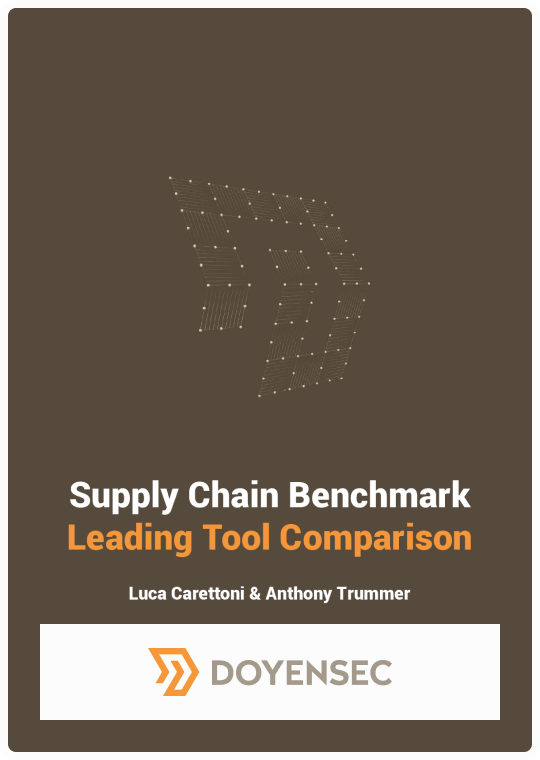
Semgrep's dataflow reachability analysis dramatically reduces false positives, as confirmed by Doyensec research.

Comparison also includes Snyk Open Source.
Grab the benchmark
doyensec logo

Experience AppSec that's smarter, not noisier

Leading engineering teams use Semgrep to secure their code earlier in development, without impact to developer velocity.

Your privacy matters to us. By submitting this form, you agree to our Privacy Policy

or